
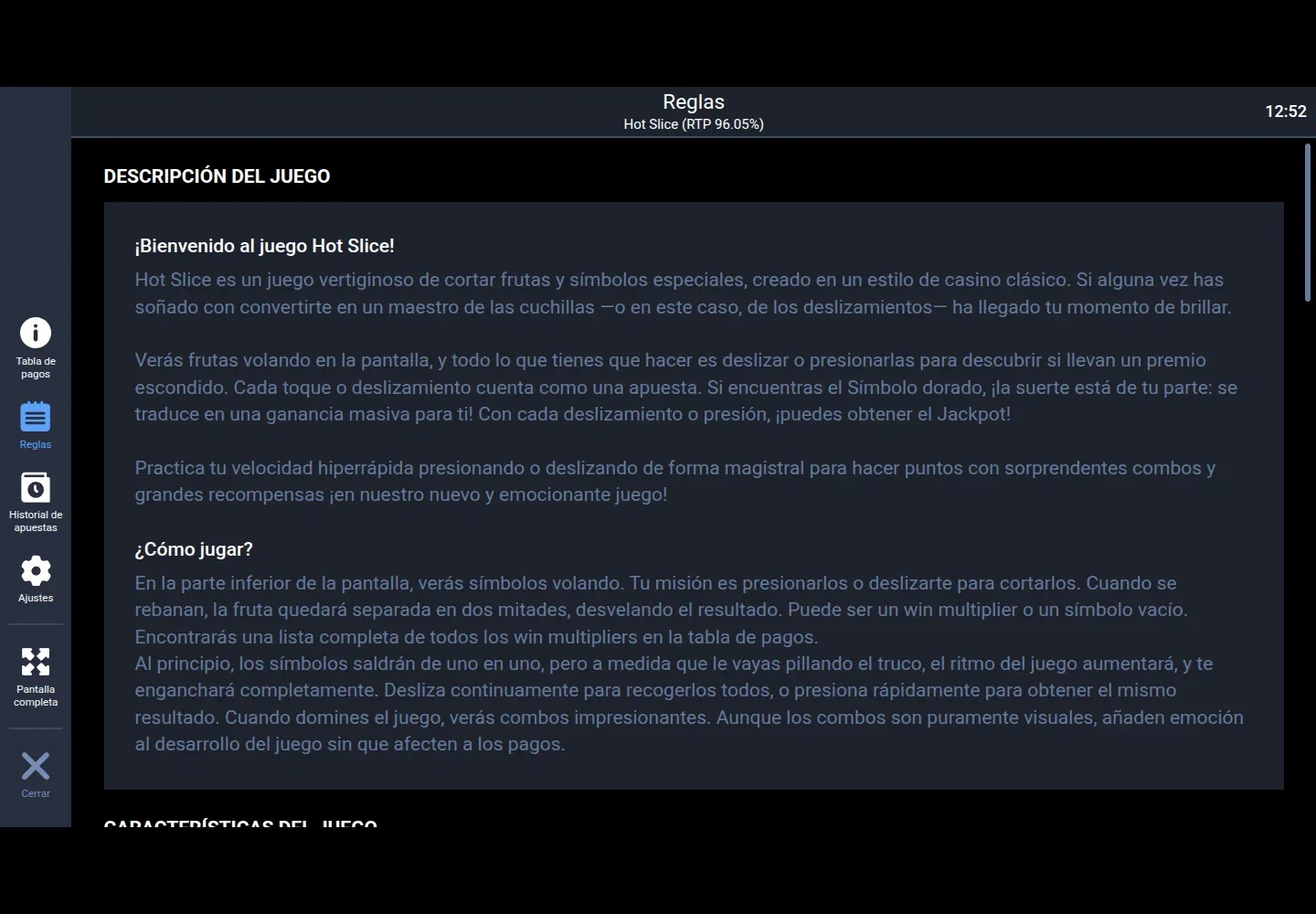
What the 96.05% RTP represents
RTP means theoretical return to player. In Hot Slice, 96.05% describes a long-term mathematical measure for the configuration shown. The figure helps you understand the game’s profile, while each interaction in a session has its own result.
The unit is a percentage of the volume wagered within the mathematical model. Keep that scale in mind when reading it: RTP belongs to a broad set of results, while a session balance follows a particular sequence of bets and prizes. Find the percentage in the client’s information alongside the controls you are using.
Keep this mathematical reference separate from the control sequence. For the gesture to make or where to find the bet, explore the controls guide. Keeping the two explanations distinct makes it easier to return directly to the figure you want.
Percentage, multiplier and amount
A return percentage, a prize multiplier and a bet amount are three different things. The percentage expresses a theoretical proportion. The multiplier indicates how many times the bet a prize represents. The amount is the sum selected for one interaction.
With an abstract bet of two units, an x3 result corresponds to a prize of six units: 2 × 3 = 6. The example uses units to show the calculation. In a client with a particular currency, use the amount and currency shown in its controls.
| Reference | Unit | How to interpret it |
|---|---|---|
| Theoretical RTP | Percentage | Long-term mathematical profile |
| Symbol prize | x multiplier | Times the bet for the interaction |
| Bet | Client units | Selected cost for each action |
| Balance | Client units | Amount displayed during the session |
The symbols and features table brings together the specific multipliers. Find the fruit or symbol and distinguish the regular and golden columns before applying the calculation.
One interaction is one bet
Each tap or swipe counts as a bet. To follow the cost of a sequence, use the bet amount shown on screen and the number of actions you take. Making gestures in quick succession changes the speed of the session; each action keeps its own cost.
Suppose you have a budget of twenty units and bet half a unit. Dividing the two gives an initial reference of forty interactions, before counting prizes. Changing to one unit per action changes that initial reference to twenty. This is a spending-planning tool, separate from the distribution of prizes.
Session decisions develops this use of the budget. Do that calculation before starting and pause whenever you want to review the bet or finish.
Jackpots expressed as multiples
Minor, Major and Grand represent x1500, x2000 and x3000 the bet. They appear as three categories separate from regular and golden symbols. The x unit helps you understand the prize scale independently of the balance visible at a particular moment.
The three values differ from a monetary account limit. A maximum amount, a currency or an operator condition belongs to the client and its play environment. For a session with an account balance, read the information in the client you open and explore its controls before choosing the bet.
Relating the figures to the screen
The demo displays DEM credits, so its examples use that unit. Open the information to find the RTP and paytable, then return to the game to follow a result. The practice client lets you work through that sequence at your own pace.
Quick history records recent prizes, and the Top 15 organises leaderboards by period. These elements let you view results and positions, while RTP describes the long-term model. Identifying each figure’s function is the most useful step towards reading Hot Slice clearly.